CED (cathodic electrodeposition) is a water-based coating process that uses electric current to deposit a uniform paint film on metal parts, including recesses a spray gun cannot reach. Wewin states it can deliver salt spray resistance above 1000 hours (ASTM B117), which suits high-volume, corrosion-critical parts.
When a component has to resist corrosion for years, a spray-applied coating is sometimes not enough on its own. Hidden corners, welded joints and hollow sections are hard to reach with a spray gun, and those are exactly the places where rust usually starts. Cathodic electrodeposition, widely known as CED or ED coating, solves this by using electricity to draw paint onto the metal.
This guide explains how a CED painting plant works, where it fits and what to consider before investing.
What Is Cathodic Electrodeposition?
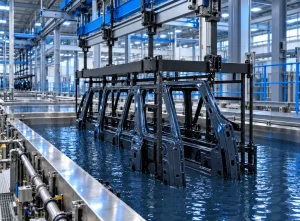
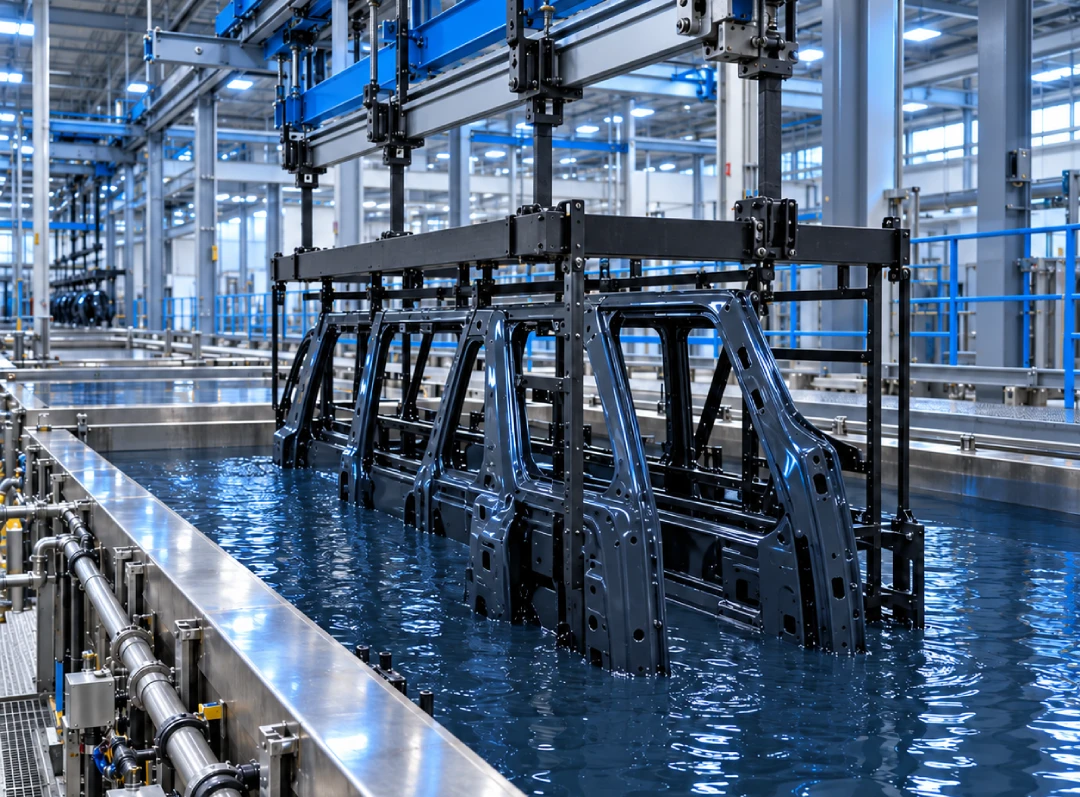
CED is a water-based paint application process in which the component is immersed in a paint bath and an electric current deposits the coating onto the metal surface. The component acts as the cathode, which gives the process its name.
Because the paint is attracted to the metal by electrical charge rather than sprayed on, it forms a uniform film across the part, including areas a spray gun cannot easily reach. Wewin notes that CED coatings can deliver salt spray resistance of above 1000 hours (ASTM B117).
How Does a CED Painting Plant Work?
A complete CED line brings several systems together:
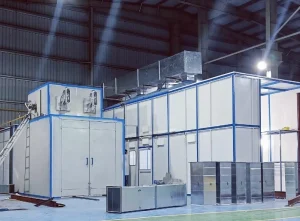
Wewin’s CED plants include the full set of equipment, including the UF system and anolyte system, and can be supplied as manual or automatic plants.
What Are the Benefits of CED Painting?
Can a CED Plant Be Automated?
Wewin’s CED process can be automated using transporter wagons programmed with a PLC for material handling and processing. Parts move through each stage in a controlled sequence and timing, which improves consistency and supports higher volumes. Plants are available from small capacities to high-volume installations.
Who Should Consider a CED Plant?
CED suits manufacturers whose parts need dependable corrosion protection and uniform coverage, for example in automotive, engineering and fabricated metal components. It is especially useful for parts with complex geometry, where spray coatings struggle to reach every surface.
CED is also commonly used as a primer coat, with a topcoat applied afterwards where appearance or extra protection is required.
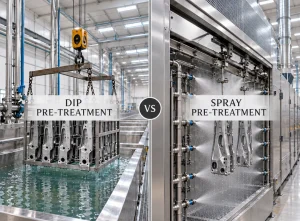
CED vs Conventional Spray Painting: What Is the Difference?
CED involves a larger initial investment than a spray booth, so it makes the most sense where volume and corrosion performance justify it. Many manufacturers use both, with CED as the base coat and spray or powder coating for the final finish.
What Should You Check Before Buying a CED Plant?
Why Choose Wewin for CED Painting Plants?
Wewin has been supplying finishing equipment since 2003. We specialise in manufacturing CED painting plants with complete equipment, provide turnkey projects, and train your team in plant operation and maintenance. Because we also make pre-treatment plants, ovens and spray booths, your CED line can be planned as one integrated system.
Contact Wewin to discuss a CED painting plant matched to your components and production goals.
FAQs
1. What is CED painting?
CED is an eco-friendly, water-based paint process that uses electric current to deposit a uniform coating on metal parts.
2. What salt spray resistance can CED provide?
Wewin states that CED can deliver salt spray resistance of above 1000 hours as per ASTM B117.
3. Does Wewin supply automatic CED plants?
Yes. Wewin offers both manual and automatic CED plants, with PLC-programmed transporter wagons for automated material handling and processing.
4. What equipment is included in a CED plant?
A complete plant includes systems such as the UF system and anolyte system, along with pre-treatment, the CED tank and a baking oven as part of the full line.
5. Does Wewin provide training?
Yes. Wewin provides turnkey projects and training in operation and maintenance of the plant.